






Robinhood is a financial platform where you can trade stocks, ETFs, options, futures, prediction markets, and crypto — all in one place, with zero-commission trading on stocks, ETFs, and options.
The Robinhood Legend desktop platform provides 90+ indicators, drawing tools, custom chart intervals, and advanced options tools for simulating returns and building multi-leg strategies.
Robinhood Gold subscribers ($5/mo) get access to AI-powered market insights through Cortex, Morningstar research reports, competitive APY on uninvested cash, and reduced pricing on futures and index options contracts.
Whether you're just getting started or actively managing a portfolio, Robinhood is designed to help you act on opportunities quickly without unnecessary complexity or high fees.
So how does Robinhood work?
Check out my video below to learn more, or keep on reading!
First things first, to use Robinhood, you need to sign up for an account here.
Be sure to use our link above, as you will get a free stock worth up to $200! You get to pick your free stock from a list of 20 leading American companies.
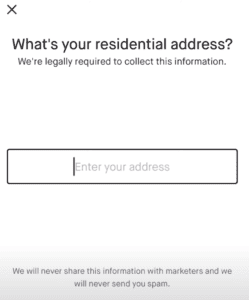
During signup, Robinhood asks for certain information, such as your employment and social security number, as legally required. Rest assured, this information is not shared.
As part of the sign-up process, Robinhood will ask a few questions about your potential relationships with individuals at publicly traded companies:
Next, Robinhood will ask you to answer some required questions about your tax situation, including whether you are subject to backup withholdings from the IRS.
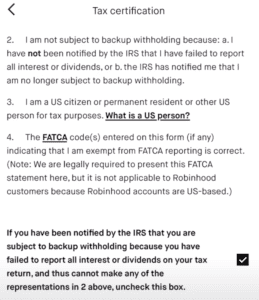
If you don't owe money to the IRS, this is most likely going to be a "no."
Robinhood is required by law to report your investment activities to the IRS, as you will need to pay taxes on your capital gains, earned interest, dividends, and more. This includes reporting on Form 1099 for capital gains, dividends, interest, and other taxable events. Investors are responsible for including this information on their annual tax return.
The next step in the sign-up process is linking your bank account to deposit funds:
Robinhood allows you to link up to 3 bank accounts and 1 debit card. Debit cards have a $1,000 daily deposit limit, with instant transfers available. Bank transfers typically take 4 to 5 business days.
Once your account is funded, you'll receive a notification about getting your free reward stock.
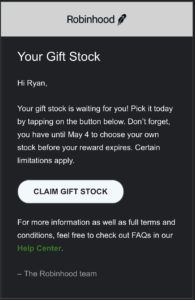
Robinhood offers a unique incentive where you can pick your free stock yourself from a list of 20 leading American companies.
Once your account is funded, you'll receive a random dollar amount that you can use to claim a fractional share of a stock.
The cash value ranges from $5 to $200, with approximately 98% of participants receiving rewards valued between $5 and $10.
Check out our full article on the Robinhood free stock here to learn more.
In the past, investors would have to purchase a whole share of a stock or ETF in order to gain exposure to the asset.
Robinhood allows you to invest in $1 increments using fractional shares, meaning you can own as little as 1/1,000,000th of a share. This is particularly useful for dollar-cost averaging strategies and for investing in high-priced stocks.
One of the next things you might want to do is search for a stock or ETF using the Robinhood app.
Here's my full video tutorial below, or keep on reading!
Here's how to search for an investment using Robinhood:
So how do you actually make money when investing through Robinhood?
While investing always carries risk, there are three primary ways investors can grow their wealth:
This method involves buying a stock or ETF at a low price and selling it at a higher price later. For example, if you buy a stock at $100 and sell it at $130, you've earned a $30 gain per share. Capital appreciation depends on factors like company performance, economic conditions, market sentiment, and new innovations.
Stocks of companies with strong earnings growth, expanding market share, or new innovations tend to attract more buyers, driving up share prices.
Some companies pay a portion of their profits back to shareholders in the form of dividends. These are typically paid quarterly and can be a reliable source of passive income.
Dividend payments can be:
Dividend-paying stocks are often found in mature industries like utilities, consumer staples, and healthcare. Many ETFs also distribute dividends from the underlying stocks they hold.
Tax tip: Qualified dividends may receive favorable tax treatment, while others are taxed as ordinary income. Be sure to review your 1099-DIV at tax time.
While less common with stocks, certain investments—such as bond ETFs or cash sweep accounts—generate interest income. Robinhood Gold members can earn interest on uninvested cash, typically at a competitive APY.
Interest income provides predictable cash flow and can complement a long-term growth strategy, especially in retirement or conservative portfolios.
To buy a stock, follow these steps:
Let's say you want to sell a stock or ETF that you own in your Robinhood portfolio. Here are the steps:
Robinhood Gold is a premium subscription service designed for active investors. For a monthly fee of $5, it offers:
Robinhood Gold offers a 30-day free trial for new subscribers.
Since its launch, Robinhood has continuously expanded its services to meet the growing demands of investors. Here are some recent developments:
In 2025, Robinhood launched Robinhood Strategies, an actively managed robo-advisor service designed to help users build and manage investment portfolios based on their individual goals and risk tolerance. This service is available for an annual fee of 0.25% of assets under management, capped at $250 for Robinhood Gold members.
Robinhood has expanded into the banking sector with its Robinhood Banking initiative. The platform now offers a range of banking services, including premium features like on-demand cash delivery and international money transfers.
This development positions Robinhood as a competitor in the growing neobank space, offering private banking experiences at a lower cost.
In an effort to leverage emerging technologies, Robinhood introduced Cortex, an AI-driven investment tool that provides real-time analysis and personalized insights to assist users with their investment decisions.
All investments involve risk and loss of principal is possible.
Brokerage services are offered through Robinhood Financial LLC ("RHF"), a registered broker-dealer (member SIPC), with clearing services through Robinhood Securities, LLC ("RHS") (member SIPC). RHF and RHS are not banks. Securities offered through RHF are not FDIC insured and involve risk, including possible loss of principal.
Options involve risk and are not suitable for all investors. Please read Characteristics and Risks of Standardized Options before trading options.
Cryptocurrency trading is offered through Robinhood Crypto, LLC (NMLS ID 1702840). Cryptocurrency held through Robinhood Crypto is not FDIC insured or SIPC protected.
Margin trading involves risk and may not be suitable for all investors. Borrowing on margin increases your level of market risk and can amplify both gains and losses. Robinhood Financial may change maintenance margin requirements at any time without prior notice.
The 3% IRA match requires a Robinhood Gold subscription ($5/mo). Customers must remain subscribed for 1 year from the first eligible deposit to keep the full match, and matched funds must stay in the account for at least 5 years. Non-Gold customers receive a 1% match. Match rate subject to change. Offer applies to self-directed IRAs only.
Robinhood Strategies charges an annual management fee of 0.25% on net portfolio value. Eligible Gold subscribers pay no management fees on the portion exceeding $100,000, capping the annual fee at $250.
Robinhood Gold is a subscription-based membership program offered through Robinhood Gold, LLC ($5/mo).
This content may include affiliate links. The publisher may receive compensation if you open an account through those links.
Get 1 Free Stock Worth Up To $200 From Robinhood!
Don't Miss This Opportunity!
Investing Simple readers can claim a free stock from Robinhood worth up to $200 when they open a brokerage account and deposit any amount.
For US Residents only. Investing Simple is affiliated with Robinhood, and we may earn a commission when you sign up for Robinhood.